Respiratory Health
Respiratory health plays an essential role in a horse’s overall health, well-being and ability to exercise comfortably. Respiratory disorders can present with obvious signs such as coughing, nasal discharge or abnormal respiratory noise, but they can also be more subtle and contribute to exercise intolerance or unexplained poor performance.
At ESMP, respiratory investigations combine clinical examination, advanced diagnostic techniques and, whenever relevant, assessment during exercise to understand how the horse’s respiratory system functions both at rest and under real working conditions.
RESPIRATORY ENDOSCOPY AT REST
What is an endoscopy?
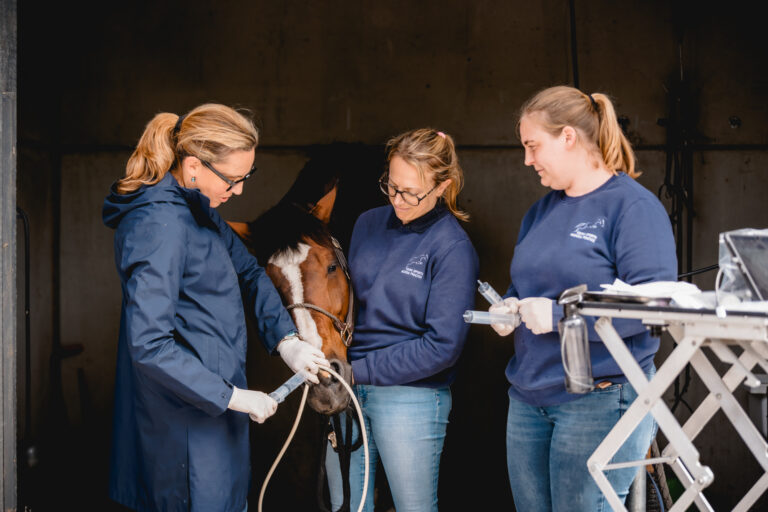
Respiratory endoscopy allows direct visualisation of the horse’s airways, including the nasal passages, pharynx, larynx, trachea and, when indicated, the guttural pouches.
The examination provides valuable information about the anatomy and function of the upper airways and can help identify inflammation, secretions, structural abnormalities or other conditions that may affect breathing.
The guttural pouches are unique anatomical structures located on either side of the horse’s throat. Because important blood vessels and nerves are closely associated with them, diseases affecting these structures can have significant consequences and require careful investigation. Endoscopy allows the guttural pouches to be examined directly when necessary.
The trachea can also be evaluated for the presence of mucus, inflammation or blood that may indicate an underlying lower airway condition.
When is an endoscopy recommended?
A resting endoscopy may be recommended in horses presenting with:
- Coughing
- Nasal discharge
- Abnormal respiratory noise
- Difficulty breathing
- Exercise intolerance or unexplained poor performance
- Blood at one or both nostrils
- Suspected upper or lower airway disease
- A history requiring further respiratory investigation
A respiratory endoscopic examination may also be included as part of a pre-purchase evaluation when appropriate.
During the examination, respiratory secretions can also be collected for further laboratory analysis if indicated.
How is an endoscopy performed?
A flexible endoscope is gently introduced through one nostril and advanced through the upper airways. The different anatomical structures are then examined systematically.
When assessment of pharyngeal and laryngeal function is important, the examination is preferably performed without sedation whenever safely possible, as sedation may influence the movement of these structures.
The procedure is generally well tolerated and can usually be performed at the horse’s own stable.
DYNAMIC RESPIRATORY ENDOSCOPY
What is a dynamic endoscopy?
Some upper airway abnormalities only occur during exercise and may not be visible during an examination at rest.
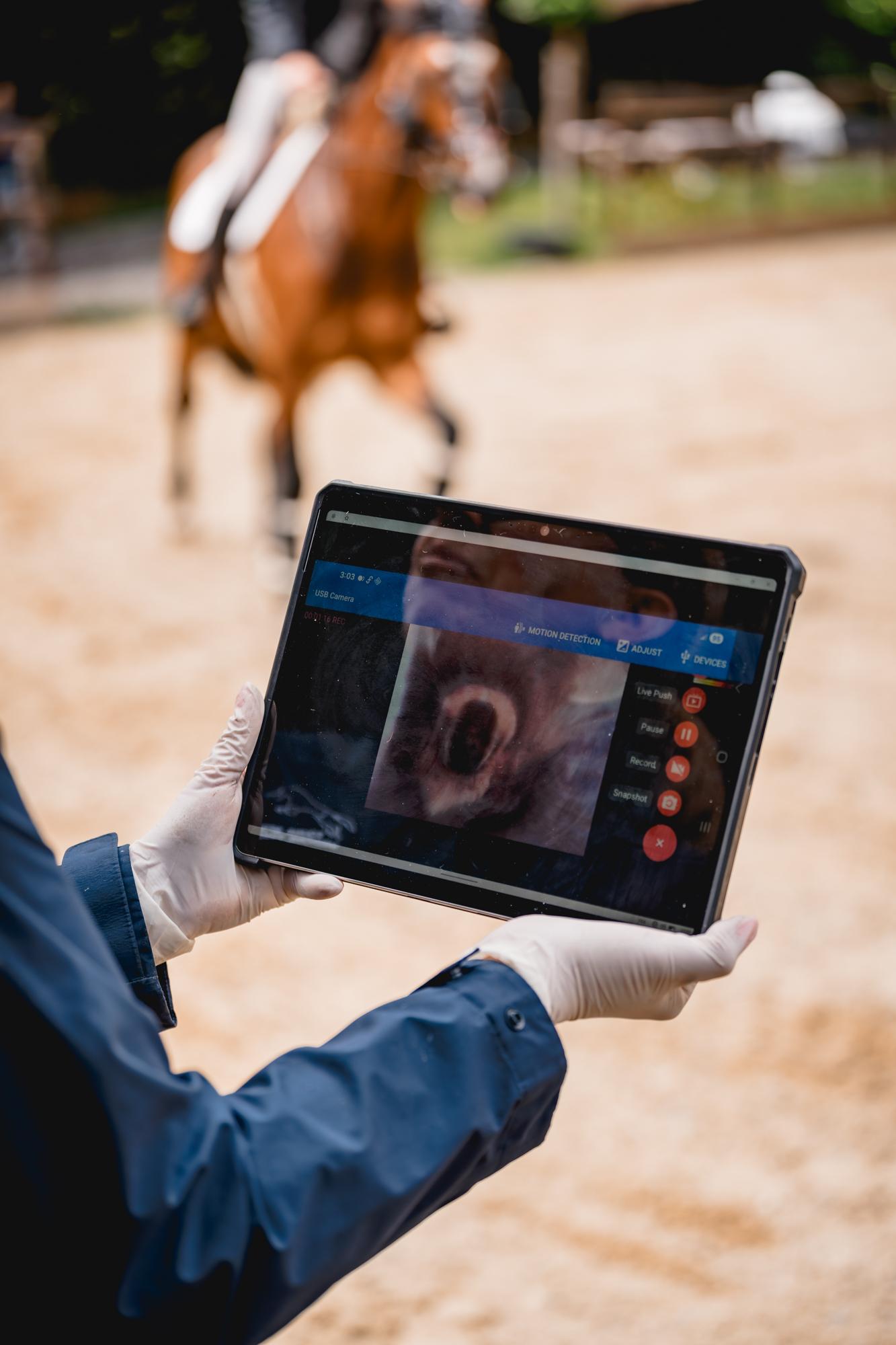
Dynamic respiratory endoscopy allows us to observe the horse’s upper airways continuously while it is exercising. This provides a real-time assessment of how the pharynx and larynx function as respiratory demands increase.
Because the examination can be performed in the horse’s usual training environment, at its normal speed and with its regular rider, it provides valuable information under conditions that closely reproduce the situation in which the problem occurs.
When is a dynamic endoscopy recommended?
Dynamic respiratory endoscopy may be recommended when a horse presents with:
- Abnormal respiratory noise during exercise
- Unexplained exercise intolerance or poor performance
- Abnormal breathing during work
- Exercise-related coughing
- Suspected dynamic upper airway obstruction
- Difficulties that appear specifically with speed, intensity or particular head and neck positions
How is a dynamic endoscopy performed?
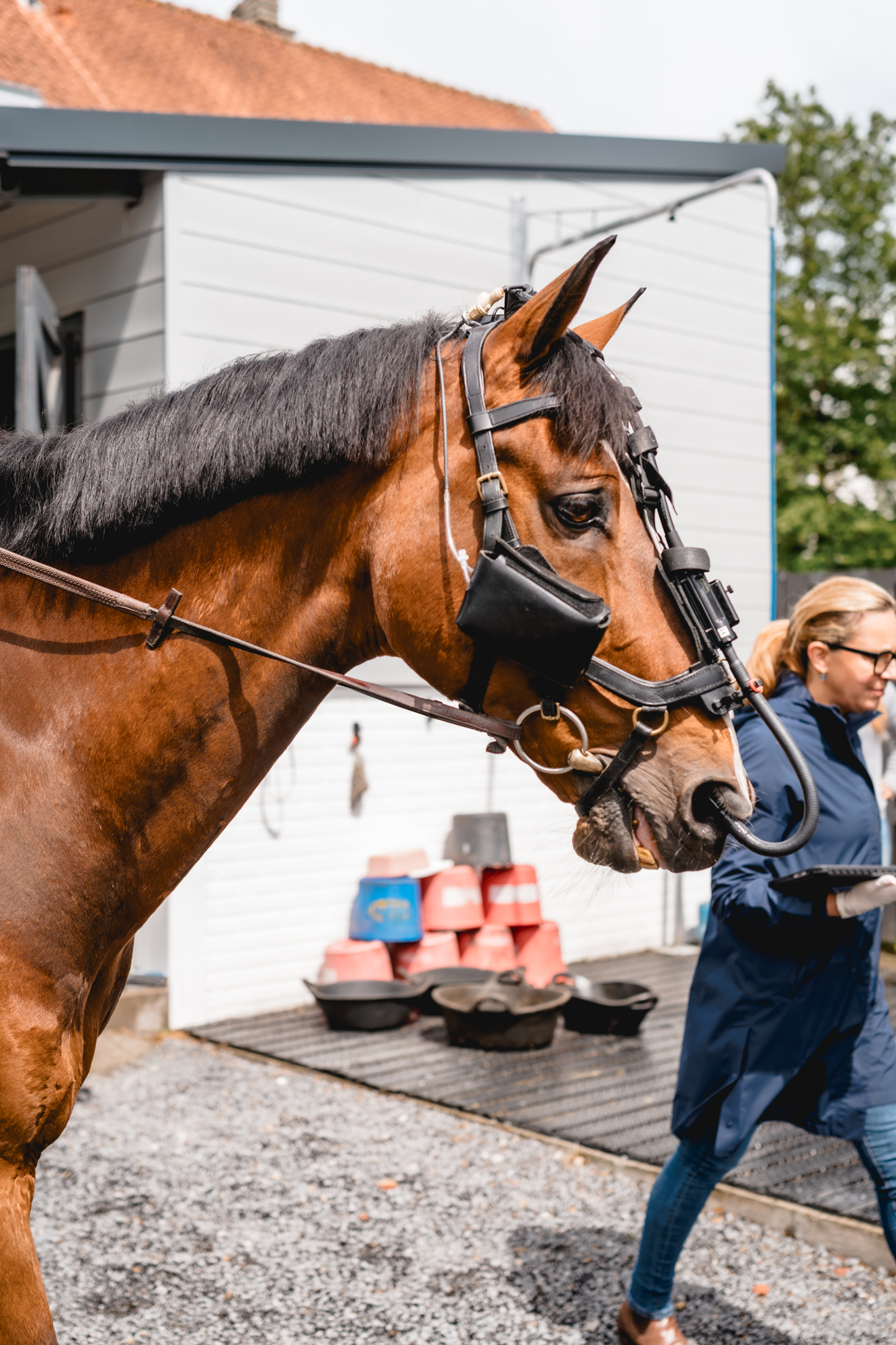
The horse is prepared for exercise as usual. A lightweight portable endoscope is positioned through the nostril and securely fixed so that the upper airways can be continuously visualised throughout the exercise test.
The horse then performs an exercise session adapted to its discipline and level. Whenever possible, the examination is carried out with the horse’s regular rider and under its usual working conditions.
Racehorses and eventing horses can be assessed on an appropriate track where higher speeds can safely be reached, while other sport horses can generally be evaluated in an arena or their normal training environment.
The airway images are recorded throughout the exercise and can also be monitored live, allowing detailed analysis of the upper airway response as exercise intensity changes.
The aim is not simply to observe the horse at rest, but to reproduce the conditions in which the respiratory problem actually occurs.
RESPIRATORY FUNCTION TESTING
What is respiratory function testing?
Respiratory function testing provides objective information about how effectively air moves through the horse’s respiratory system.
It can help identify changes in airway resistance and respiratory mechanics associated with conditions such as airway obstruction or bronchial hyperreactivity.
Respiratory function testing may also be useful for monitoring horses over time and assessing their response to treatment.
How is this test performed?
At ESMP, respiratory mechanics can be assessed using Impulse Oscillometry (IOS), a non-invasive technique that measures the response of the respiratory system to small pressure impulses.
A mask is gently placed over the horse’s nose while the horse breathes normally. Measurements are obtained without requiring forced breathing manoeuvres, making the examination quick and well tolerated.
The resulting data provide objective information that can complement the clinical and respiratory examination.
THORACIC ULTRASONOGRAPHY
What is a thoracic ultrasonography?
Thoracic ultrasonography is a non-invasive imaging technique used to examine the surface of the lungs, the pleura and other structures within the thorax.
It can help identify abnormalities such as changes in the pleural surface, fluid accumulation, areas of altered lung tissue or lesions located close to the chest wall.
When deeper structures need to be evaluated, additional diagnostic imaging such as thoracic radiography may be recommended.
How is this examination performed?
Thoracic ultrasonography is performed with the horse standing and generally does not require sedation.
Depending on image quality and the horse’s coat, small areas may need to be clipped. An appropriate contact medium is applied to the skin before the thorax is systematically examined with the ultrasound probe.
The examination can usually be performed directly at the horse’s stable.

RESPIRATORY FLUID SAMPLING
What are respiratory fluid samples?
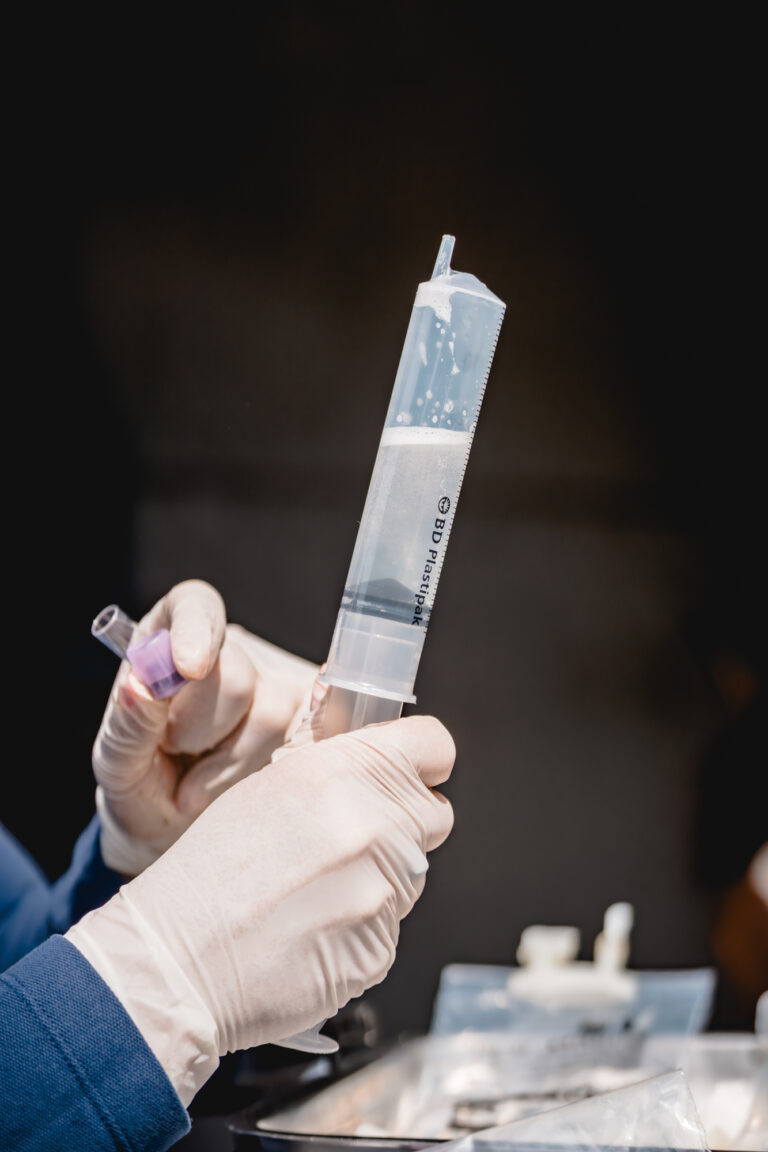
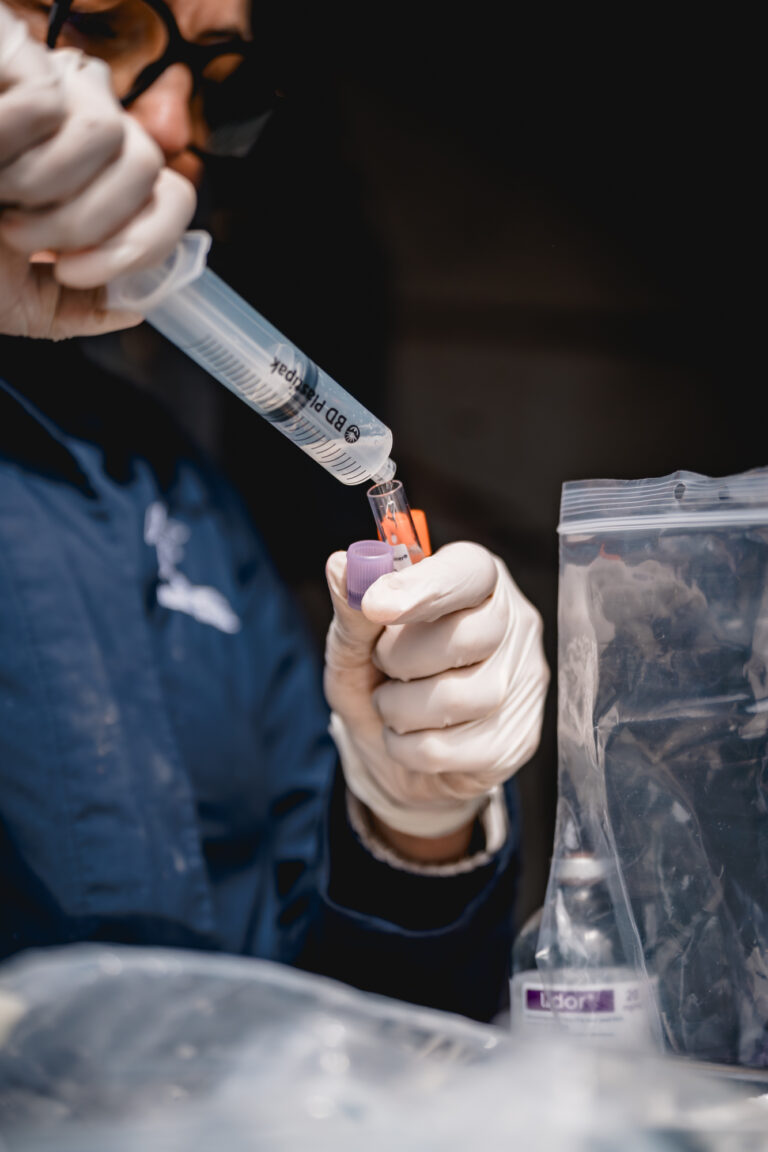
When inflammation or infection of the lower airways is suspected, analysing respiratory secretions and cells can provide important information about what is happening within the respiratory system.
Two commonly used techniques are the tracheal wash (TW) and bronchoalveolar lavage (BAL).
A tracheal wash collects secretions from the trachea and can be particularly useful when investigating suspected respiratory infection.
A bronchoalveolar lavage samples cells and fluid from deeper within the lower airways and provides valuable information when investigating inflammatory respiratory conditions.
The samples are submitted to a specialised laboratory for appropriate analysis. Depending on the clinical question, this may include cytology, bacterial culture and other diagnostic testing.
How are the samples collected?
For a tracheal wash, the horse is usually sedated and an endoscope is passed through the nostril into the trachea. A small amount of sterile saline is introduced and then recovered to obtain a representative sample of respiratory secretions.
For a bronchoalveolar lavage, a flexible tube or endoscope is advanced into the lower airways. Sterile fluid is introduced and gently recovered, collecting cells from the deeper respiratory tract.
The samples are then analysed and interpreted together with the horse’s clinical findings and other diagnostic results to help establish the most appropriate treatment and management plan.
Our clinical services
Is something affecting your horse's health, well-being or performance?
Looking for answers about your horse's health, well-being or performance?
Our team combines clinical expertise with advances diagnostic tools to support your horse’s health and well-being at every stage.