
What's a Sports Medicine Evaluation?
Sports medicine evaluations provide a comprehensive assessment of your horse’s health, fitness and response to exercise. By combining veterinary expertise with objective data, they help ensure that training remains appropriate for each horse while supporting long-term health, well-being and performance.
These evaluations can help to:
- Assess fitness and adaptation to training
- Detect subtle or subclinical health issues before they become clinically apparent
- Monitor recovery after competition or periods of intensive training
- Identify factors that may affect the horse’s ability to exercise comfortably and efficiently
- Guide individualised training, recovery and management strategies
Each assessment considers the horse as a whole, taking into account its health, training program, workload, recovery, environment and individual needs. Findings are translated into practical recommendations, in close collaboration with the rider, trainer, groom and referring veterinarian.
Regular monitoring throughout the season
As training intensity and competition schedules evolve, so do the horse’s needs. Regular sports medicine follow-ups allow us to monitor these changes over time and identify subtle variations before they develop into more significant concerns.
Depending on the horse and the objectives of the season, two to four evaluations may be scheduled throughout the year. This longitudinal approach helps assess how the horse tolerates its workload, recovers from competition and adapts to training, while ensuring that health and well-being remain at the centre of every decision.
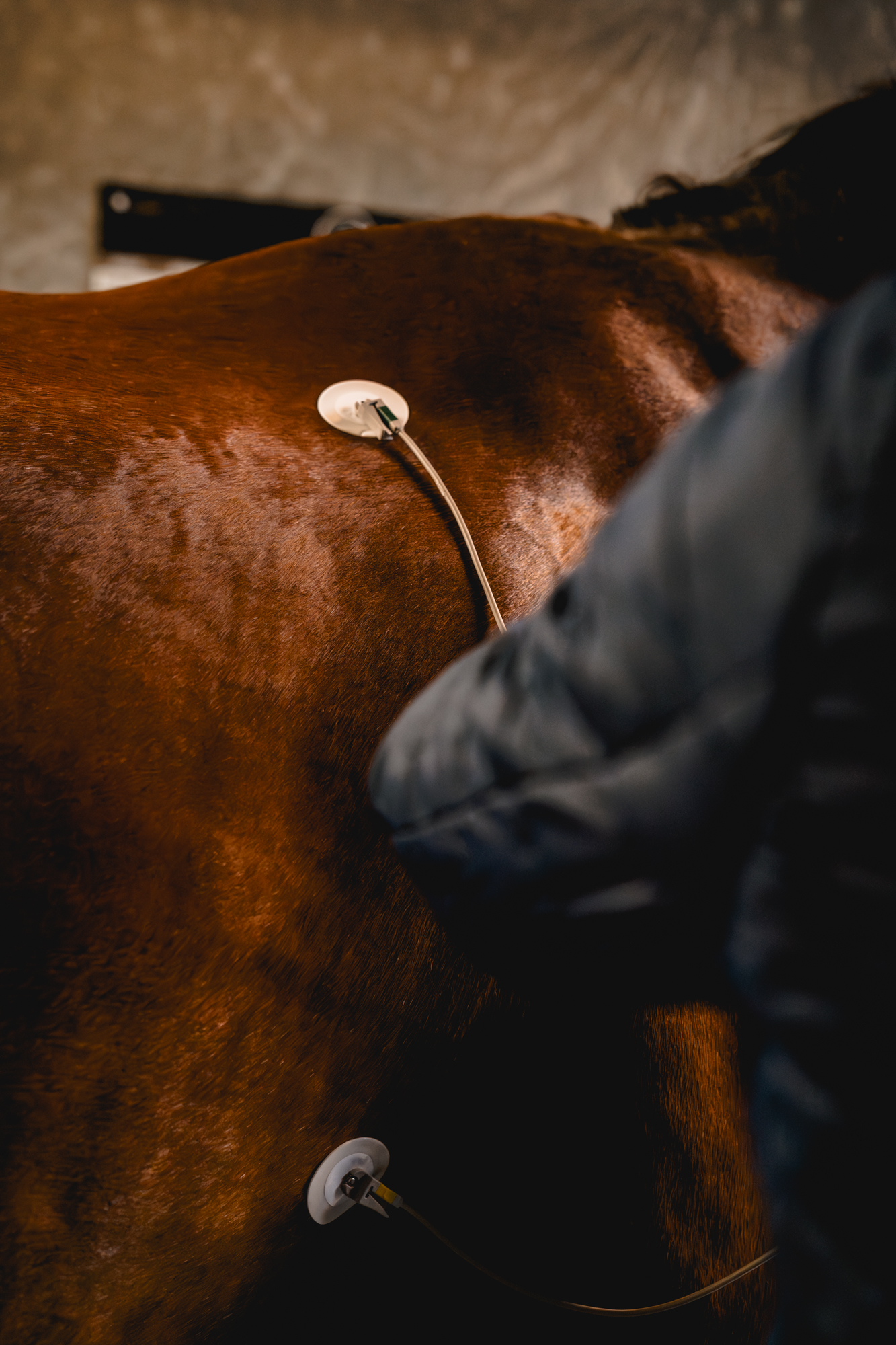
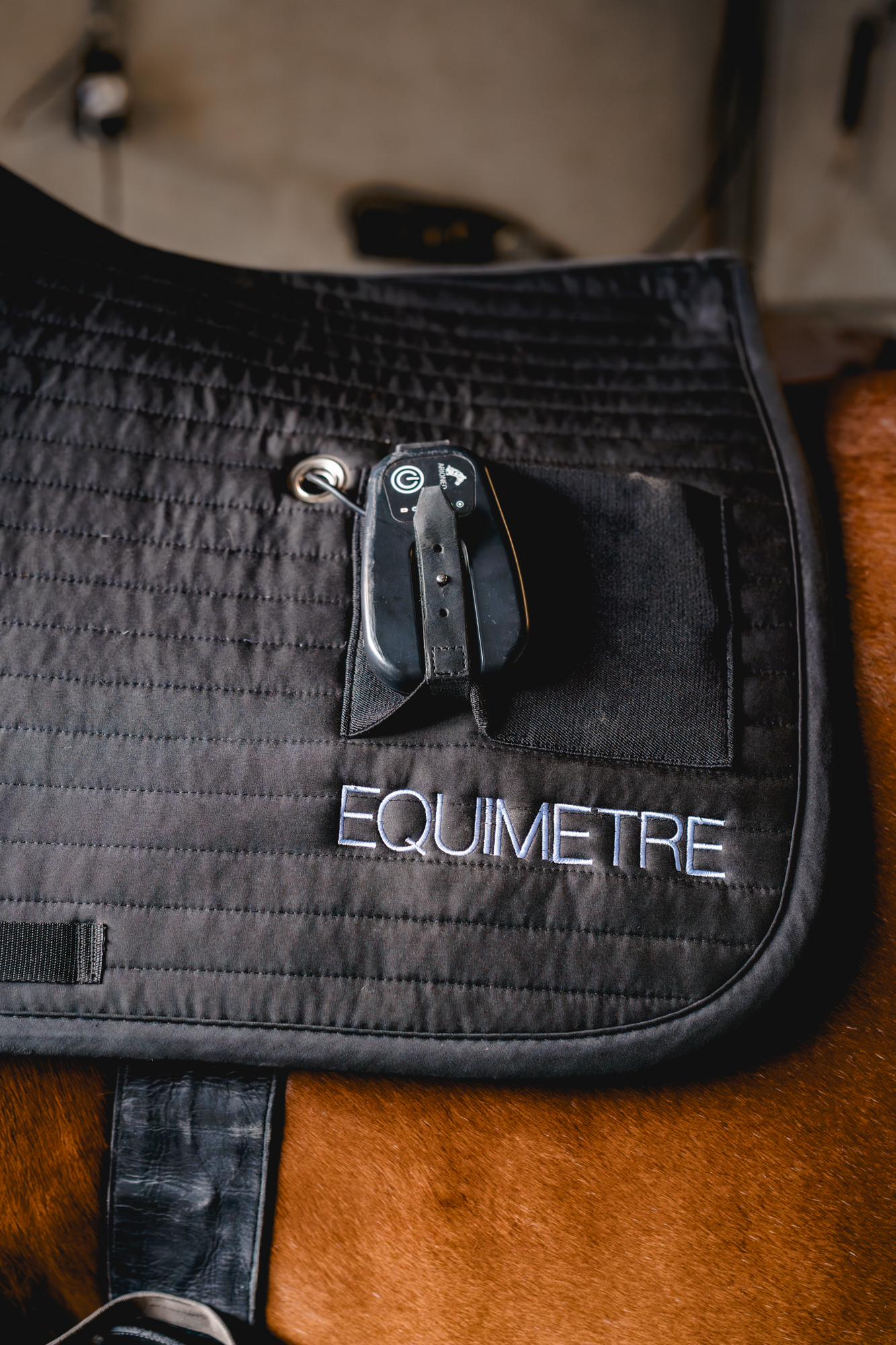
How is a Sports Medicine Evaluation performed?
Whenever possible, the evaluation is performed during the horse’s usual training session and in its normal working environment. The horse should be in active work and clinically sound at the time of the assessment.
The type and location of the exercise test are adapted to the horse’s discipline and level of fitness. Racehorses and eventing horses may be evaluated on a racecourse or suitable training track to allow assessment at higher speeds, while sport horses can generally be examined in their usual arena. Ideally, the horse is ridden by its regular rider to ensure that the evaluation reflects its normal working conditions.
Before exercise, our veterinarians review the horse’s medical history, training program, workload and competition schedule, followed by a complete clinical examination at rest.
After an appropriate warm-up, the horse performs a progressive exercise test consisting of several stages of increasing intensity. The protocol is individually adapted according to the horse’s discipline, fitness level and the objectives of the evaluation.
Throughout the exercise, ECG, heart rate and speed can be continuously recorded. Small blood samples may also be collected at specific stages to measure blood lactate levels and provide additional information on the horse’s physiological response to exercise and recovery.
From data to individualised recommendations
The information collected at rest, during exercise and throughout recovery is analysed together to build a comprehensive picture of how the horse responds to its workload.
Results are interpreted according to the horse’s individual profile and, when relevant, compared with available reference data. If an abnormality or area of concern is identified, additional targeted examinations may be recommended.
This combination of clinical assessment, objective data and scientific analysis allows us to provide practical, individualised recommendations for the horse’s health, training and recovery.
Our clinical services
Is something affecting your horse's health, well-being or performance?
Looking for answers about your horse's health, well-being or performance?
Our team combines clinical expertise with advances diagnostic tools to support your horse’s health and well-being at every stage.