
Doppler Echocardiography
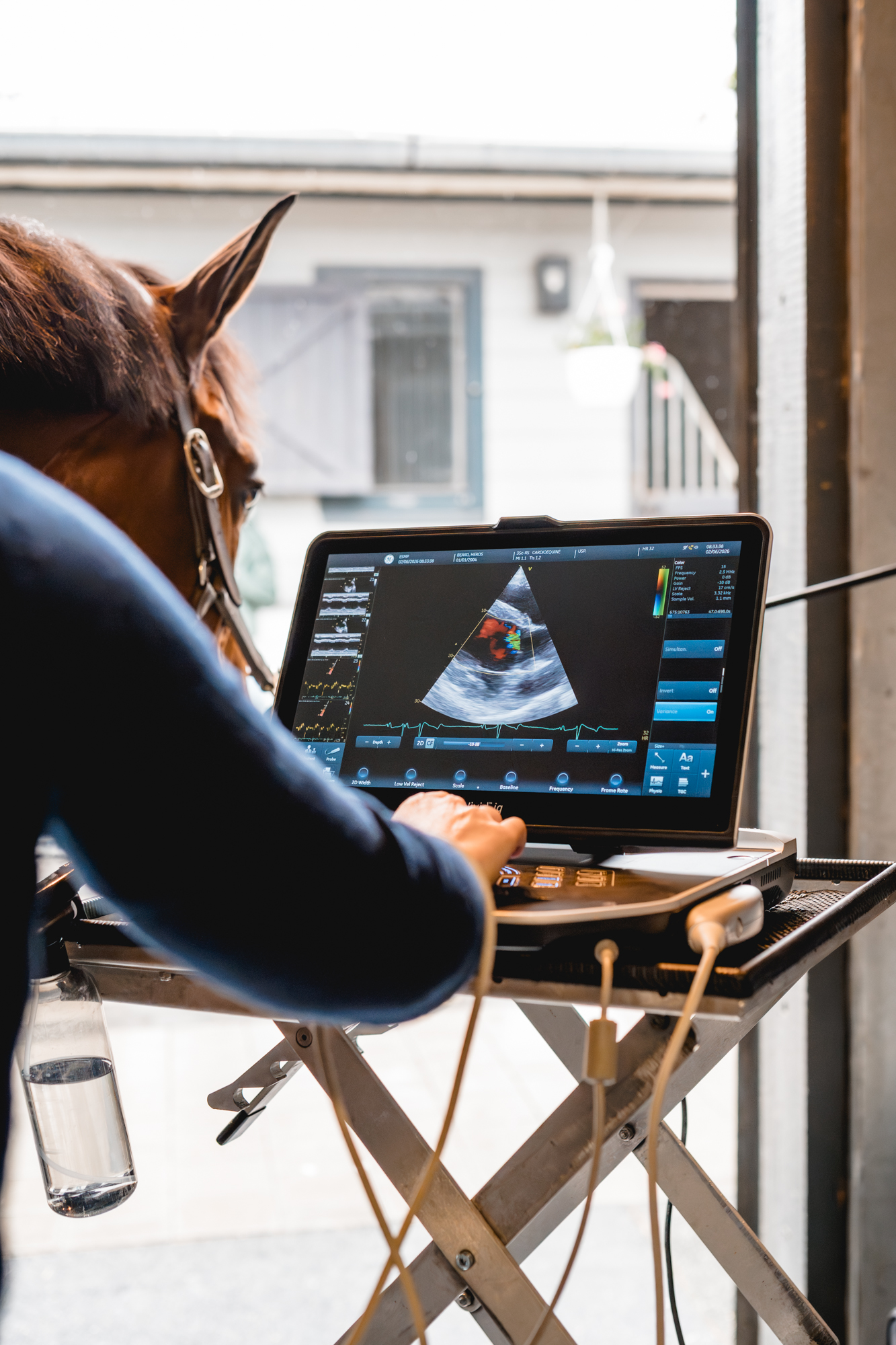
Doppler echocardiography is a non-invasive imaging technique that provides a real-time assessment of the heart. It allows our veterinarians to evaluate both cardiac anatomy and function, including the heart chambers, valves and overall cardiac performance.
Doppler imaging provides additional information about blood flow, including its direction and velocity. This helps identify abnormal blood flow patterns associated with conditions such as valvular insufficiency or congenital cardiac abnormalities.
When is Doppler echocardiography recommended?
An echocardiographic examination may be recommended when:
- A heart murmur is detected during auscultation
- A cardiac arrhythmia is identified or suspected
- Clinical signs suggest an underlying cardiac condition
- Further cardiac assessment is required as part of a pre-purchase examination
- Follow-up of a previously diagnosed cardiac condition is needed
The examination helps determine the clinical significance of a cardiac abnormality and its potential impact on the horse’s health, well-being and athletic activity.
How is the examination performed?
Echocardiography is a non-invasive examination that can usually be performed in the horse’s own stable.
A small area behind the forelimb is moistened and ultrasound gel is applied to optimise image quality. The ultrasound probe is then positioned against the chest to obtain detailed images of the heart from different angles.
Electrocardiogram or ECG
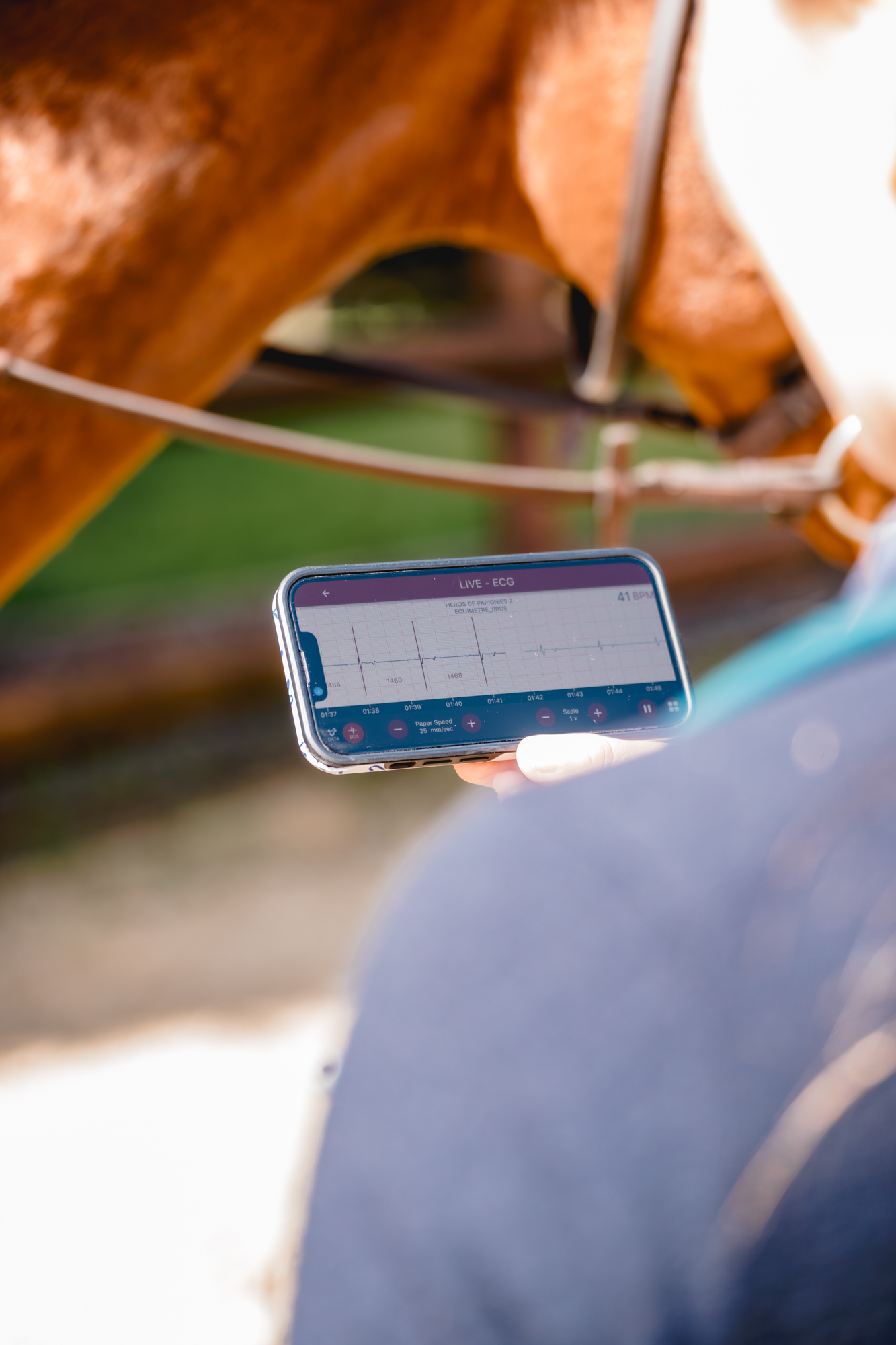
An electrocardiogram (ECG) records the electrical activity of the heart and provides essential information about heart rate and rhythm.
In horses, ECG recordings can be performed at rest, during exercise or over an extended period of time. Continuous ambulatory recordings, such as a 24-hour Holter ECG, can be particularly useful for detecting intermittent rhythm abnormalities.
How is an ECG performed?
Removable electrodes are placed on the horse’s thorax and/or neck and connected to a portable recording unit.
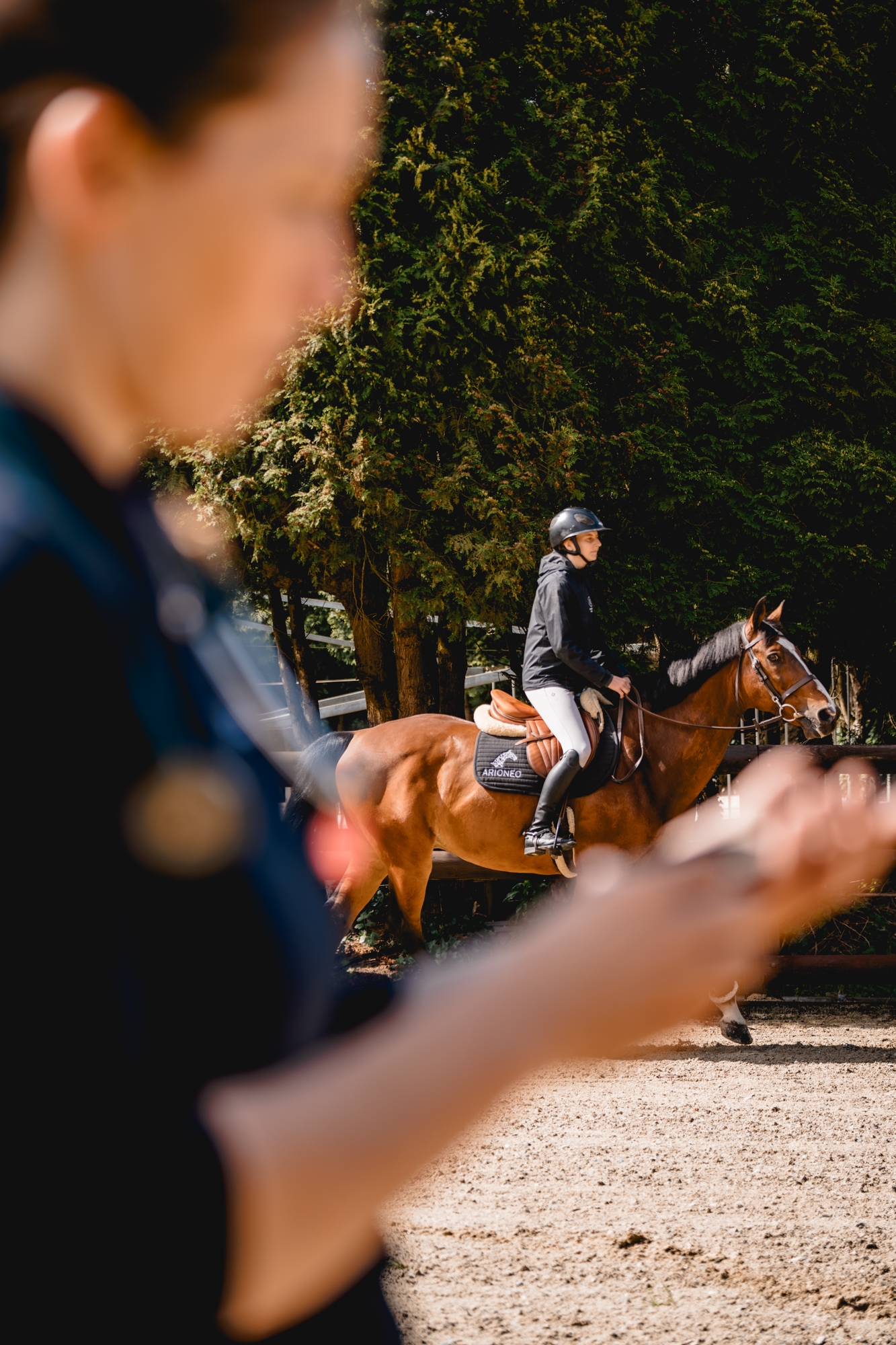
Depending on the purpose of the examination, the ECG can be recorded while the horse is resting, training or performing its usual exercise. The electrical signal can be continuously recorded for subsequent analysis and, when appropriate, monitored live through telemetry.
This allows our veterinarians to evaluate the horse’s cardiac rhythm in its normal environment and under real-life exercise conditions.
When is an ECG recommended?
An ECG may be indicated in cases of:
- An arrhythmia detected or suspected at rest
- Fainting, weakness or collapse
- Unexplained poor performance or exercise intolerance
- An underlying condition that may predispose the horse to cardiac arrhythmias
- Monitoring of a previously diagnosed rhythm abnormality
ECG during exercise
Some cardiac arrhythmias only occur during physical activity and may therefore remain completely undetected during a resting examination.
Recording an ECG during exercise allows us to assess the horse’s cardiac rhythm under conditions that more closely reflect its usual athletic activity. This can be particularly valuable when investigating unexplained poor performance or exercise intolerance.
Our clinical services
Is something affecting your horse's health, well-being or performance?
Looking for answers about your horse's health, well-being or performance?
Our team combines clinical expertise with advances diagnostic tools to support your horse’s health and well-being at every stage.